Table of Content
If it stands up on its own, it means your plaster is just right. An electric drill with a paddle attachment can save you a lot of time if you're mixing up large or multiple batches. You must know that mixing the plaster with an attachment on your drill will cause the plaster to set much faster. Use the attachment for large jobs, where you will apply a lot of plaster in a short amount of time. If you are doing small patch-work, use a smaller bucket and mix by hand so that the plaster will set slower and give you time to work. A preliminary coat will also prevent the substrate from leaching moisture from the plaster, which can cause crumbling.

The black check in western hemlock is the result of insect attacks. The reddish-brown streaks so common in hickory and certain other woods are mostly the result of injury by birds. The discoloration is merely an indication of an injury, and in all probability does not of itself affect the properties of the wood. Ordinary sap-staining is due to fungal growth, but does not necessarily produce a weakening effect.
Earlywood and latewood
However, if you can still see the wood grain or you had to sand the surface after the first layer, you’ll need to add a second thick and even later of primer. For larger surfaces like wood siding or a deck, you can scrape the old paint or stain off using a wire brush or even a pressure washer. Aside from making a surface shiny, polishing pastes can also clean the surface of aluminum and take off oxidation. Purchase a metal polishing paste that can safely be used on aluminum and refer to its package to apply it to the oxidized area. Do the same cleaning process as you did with vinegar, this time with lemon juice.
If you are cleaning a small surface, you can also simply rub sliced lemon over the oxidized surface and wipe away. Dip the lemon slice in some salt to add abrasiveness if you are cleaning a particularly tough patch of oxidation. Don’t use abrasive materials like steel wool or sandpaper to scrub the surface of the aluminum. While this can scrape away oxidation, it also will scratch the surface of the aluminum and make oxidation harder to remove in the future. If you are cleaning a large aluminum surface, soak a cloth in vinegar, then wipe it across the oxidation.
Wood
As an abundant, carbon-neutral renewable resource, woody materials have been of intense interest as a source of renewable energy. In 1991 approximately 3.5 billion cubic meters of wood were harvested. If you have to go to your local hardware store for help, consider taking a photo of the item/area you’re painting or staining and bringing it with you . This will help the person at the hardware store understand what issues you might be having and therefore which products you need to address those issues. After, apply primer, sanding in between coats of primer in order to get a better adhesion to the paint.
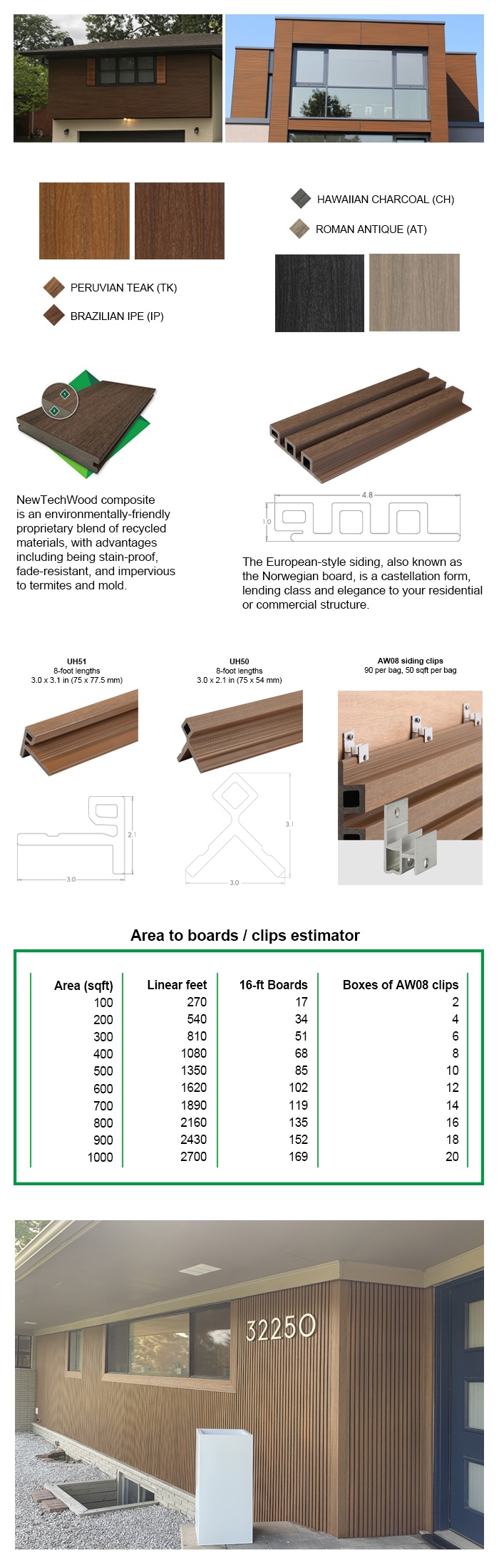
Fiber cement siding comes in various options such as boards, planks, panels, logs, and shingles. Fiber cement siding styles mimick the look of wood, stone, brick, and stucco so accurately that the material is often accepted in historic districts. However, a big potential stumbling block for Microsoft’s mobile gaming ambitions could be its control of Call of Duty on both mobile and console. Microsoft has seen success with Xbox Game Pass, and it has made it clear it wants to bring Activision games to the service. Regulators are now weighing how this would impact competition. In buildings made of other materials, wood will still be found as a supporting material, especially in roof construction, in interior doors and their frames, and as exterior cladding.
Questions To Ask Siding Installers
If you are washing aluminum wheels or siding, soak a cloth in hot water and hold it against the buildup to loosen it, then use a flat spatula to scrape it off. Apply a commercial aluminum cleaner or metal polishing paste for stubborn areas that don't respond to natural cleaners. Make sure you hammer a nail into the top and bottom nail slots on the panel. There needs to be j-channel along each edge of the frame around any windows or doors. Choose sheathing that's no more than 1 inch (2.5 cm) thick so you're not building too far out from the wall. Our trained team of editors and researchers validate articles for accuracy and comprehensiveness.
Since wood is hydroscopic this potential instability effectively limits the length and width of the boards. Wood is also commonly used as shuttering material to form the mold into which concrete is poured during reinforced concrete construction. Wood has a long history of being used as fuel, which continues to this day, mostly in rural areas of the world.
To that end, DePaul prohibits discrimination based on sex in the university’s educational programs and activities, including in matters of employment and admissions. Any alleged violations of this policy or questions specific to sex discrimination should be directed to DePaul’s Title IX Coordinator/Director of Gender Equity. Visit DePaul’s Title IX website for contact information and to learn about more options for reporting allegations of sex or gender-based discrimination, harassment or violence.
Sand the surface of the wood until it's smooth, then wipe off any dust and debris. If the first coat doesn't cover the wood grain underneath, let it dry, sand the wood a second time, then apply a second coat. Install horizontal furring strips every 16 inches if the wall is uneven. Furring strips are thin, wooden strips that you can find at your local hardware store. Then, nail them to the surface you're working on, leaving 16 inches between each strip.
The quality of the site where the tree grows undoubtedly affects the character of the wood formed, though it is not possible to formulate a rule governing it. In general, however, it may be said that where strength or ease of working is essential, woods of moderate to slow growth should be chosen. In diffuse-porous woods the pores are evenly sized so that the water conducting capability is scattered throughout the growth ring instead of being collected in a band or row. Examples of this kind of wood are alder, basswood, birch, buckeye, maple, willow, and the Populus species such as aspen, cottonwood and poplar. Some species, such as walnut and cherry, are on the border between the two classes, forming an intermediate group.
If the distinctiveness between seasons is annual (as is the case in equatorial regions, e.g. Singapore), these growth rings are referred to as annual rings. Where there is little seasonal difference growth rings are likely to be indistinct or absent. If the bark of the tree has been removed in a particular area, the rings will likely be deformed as the plant overgrows the scar. This process is known as secondary growth; it is the result of cell division in the vascular cambium, a lateral meristem, and subsequent expansion of the new cells.
Jeff Huynh is the owner of Moseybolt, a full service solution in home services, renovations, and repair in the Greater Seattle area. He has a BS in Business Administration from the San Francisco State University and his Certificate in Industrial Electronics Technology from North Seattle College. It's best to wait a full day between coats of paint, especially if it's a heavy coat, as environmental changes can cause wood to warp.

In temperate softwoods, there often is a marked difference between latewood and earlywood. The latewood will be denser than that formed early in the season. Hence the greater the proportion of latewood, the greater the density and strength. In choosing a piece of pine where strength or stiffness is the important consideration, the principal thing to observe is the comparative amounts of earlywood and latewood. The width of ring is not nearly so important as the proportion and nature of the latewood in the ring. The term heartwood derives solely from its position and not from any vital importance to the tree.